In spite of battening down the hatches for the Scottish winter the good folks of Crieff managed to contribute £155 to the CAP funds.
The 'Mission' Category
» Mission
Given that everyone is broke in January we’re pleased to report that the CAP contributions for Jan were £115.
December was a good month for CAP – probably the best yet. Contributions during the month came to £2545.20, making a total for 2007 of around £8300 plus the £8000 from the Church budget. Not bad for a church of 60+ members…
We’re having our annual Church Business Meeting this coming weekend after which we’ll post the annual report for the CAP funds.
We received confirmation that the last CAKE contribution of GBP7000 has finally arrived at Maluti in Lesotho. We hope to post more information on what the money will be used for soon…
Mission ~ Kenya Project
Posted in Mission on October 10th, 2007
(the text below is from Harry Wilby, of the Crieff Adventist Church and an enthusiastic member of our CAP committee)
I have never been on a Package Holiday. With family and relatives scattered from California to Western Australia, and in Denmark, These have been the usual destinations for annual breaks.
I’d nothing planned for this year, but in February, an Email arrived from the Seventh-day Adventist headquarters with an invitation to join a youth mission project in Kenya to build two classrooms at an SDA school for young Masai girls rescued from forced marriages, genital mutilation, or child labour. I’ve always wanted to visit East Africa, and now I had a reason to go.
On June 28th, when twenty eight of us met up at Heathrow for an overnight flight to Nairobi, I discovered that I was the oldest youth in the group. We were a mixed bunch with varying skills in construction work, but lots of enthusiasm. Our boss was Youth Leader, Pastor Des Boldeau.
As well as completing two classrooms to be used for computer training and a science lab, a medical team would hold clinics and health education sessions with the help of two local Adventist medical specialists, others of our group would be involved with the school activities, and an evangelistic team would hold daily meetings down in the town each late afternoon. Three people had experience in the building trade, including the Russian Pastor of the London Russian Church, and the rest of us varied from being proficient DIY’ers, to having little previous experience. Now was the time to rectify that and get a few blisters in the process.
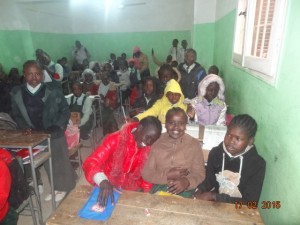
Kajiado Adventist Educational and Rehabilitation Centre is situated 70 km south of Nairobi on the road and rail route to Tanzania. The school has about 100 girls, up to 16 years of age, and some young boys who are sons of some of the older girls. But it is planned to increase enrolment to 200 to cope with the number of girls needing safety and education. The Kenyan government now provides free education in state schools, but does not support private schools, so Kajiado relies almost entirely on donated financing to feed, clothe and educate its pupils. Families from whom the girls have been rescued are usually poor, and although a few will maintain communication with their daughter, none so far will contribute to their upkeep. The faithful Adventist staff and teachers are paid much less than state employees, and some months there is not enough to give them their full pay.
One aspect of the girl’s education which amazed us and was also a great pleasure to us as we worked (and in worship in church) was their singing classes and choir practises. The lively African songs were rendered with beautiful voices and harmony.
By the time we arrived, the building’s walls were erected from hand finished solid stone quarried blocks. The forming was in place ready to pour the reinforced concrete lintels to support the roof, so the first day was hard labour barrowing in sand, stone and cement, mixing it manually, and handing several tons of it up ladders to be poured in place.
As the project inevitably ran on ‘Kenyan Time’, delays in the arrival of essential materials frequently found us looking for alternative tasks to fill otherwise idle hands. This was a source of frustration at times, but all our prayers for the success of the project were answered eventually.
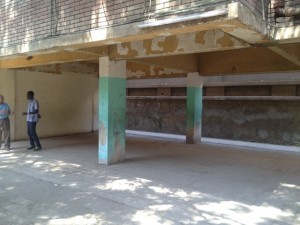
For two days most of us passed rocks down a human chain from where trucks had tipped them, to infill the foundation base for a large dining room and kitchen which the contractors were also working on. We also dug out the foundation for the full length veranda of the classrooms.
Eventually the timber for the roof trusses came, nails and more hammers were purchased, and the carpenters among us began splicing lengths of timber together to build eight 35 ft long supports for the roof. The window frames were of substantial steel construction, but the contractors had made the apertures one and a half inches too shallow. Two days were spent chiselling away at the solid stone blocks before the frames could be fitted.
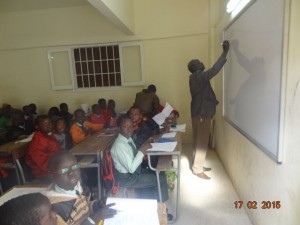
By the second week the concrete lintels were deemed dry and strong enough to support the weight of the trusses which were manhandled in through the doors and rotated up into position. Eventually, the remaining timber arrived for the lateral supports and the corrugated aluminium sheets nailed in place. More stone chiselling was needed to prepare for electrical conduits to be routed in the walls before plastering was done. This was a task none of us had looked forward to, but the local contractors did a fantastic job, even moulding a finely smooth ‘blackboard’ on one wall in each room.
A final major task was to landscape all the spare soil dug out for the foundations, but with many of the school pupils helping us, this was finished, and shrubs and trees planted in time for marquees to be erected and chairs set out on level ground ready for the completion ceremony when local dignitaries, state educational officials and staff from the Adventist Central Kenyan Conference office arrived to accept the completed buildings.
But first, we treated ourselves to a morning off, when we were taken by ‘Masai John’ as we came to know him, to visit his village and meet his family and neighbours whom he was gently and patiently seeking to teach about the love of Jesus for them. The only Masai adult member of the Kajiado church, John had entertained us with his wit and humour as we worked, and was obtaining much of the Masai craft work and artefacts which our group wanted to take home.
For our last weekend we travelled for a whole day on atrocious African roads to cover the 260 miles to the Masai Mara Game Reserve. Accommodation was basic, but the safaris were just wonderful. I always enjoy the excellent TV programmes such as ‘Big Cat Diary’, but to see these animals in the flesh in their natural setting was a special privilege and a wonderful end to our visit to Kenya.
I so glad I went. It was one of the best holidays, ever!
(the text below is from Ruth Farrer, who has just returned from visiting Romania and the Chesau home)
Robi Horvath married Claudia on 22 July. They will live in the section of the Home where Robi’s parents lived. The parents have built a small flat at the other end of the Home for themselves. Czabi and Hajni Horvath are expecting their first baby in September. Hajni will not work for the next 2 years.
Koti, our nurse, has left to work in Italy, but Claudia has just qualified as a nurse and will take her place. Claudia will attend the Adventist Seminary in Budapest for about 10 days for the next 3 years to get another essential government qualification for running a nursing home.
The CAP fund is currently paying the salaries of Claudia (nurse in charge), Utka (head of kitchen) and Ioan (cares for male patients, helps with laundry, cleaning and building – in other words he does whatever needs to be done!).
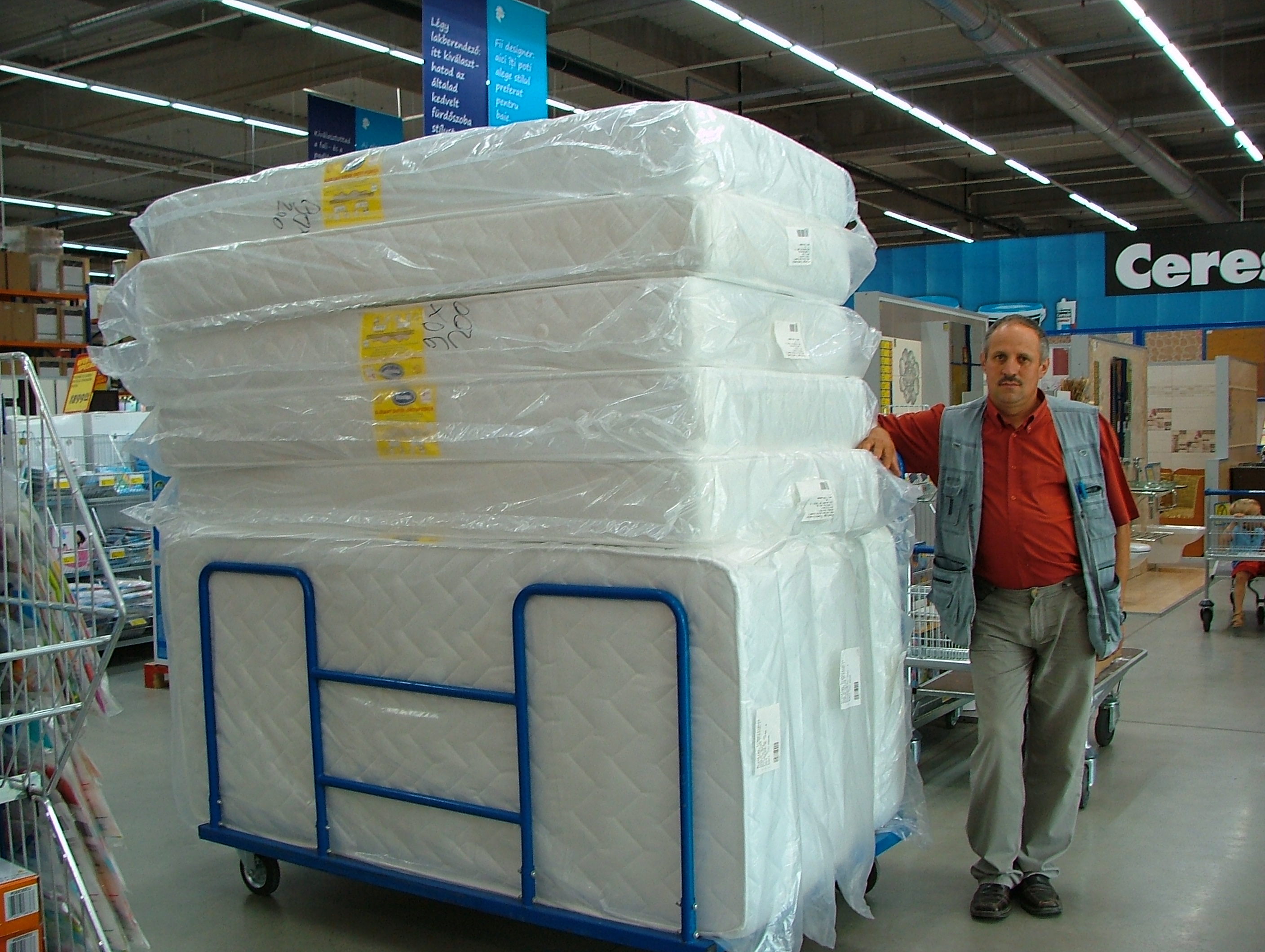
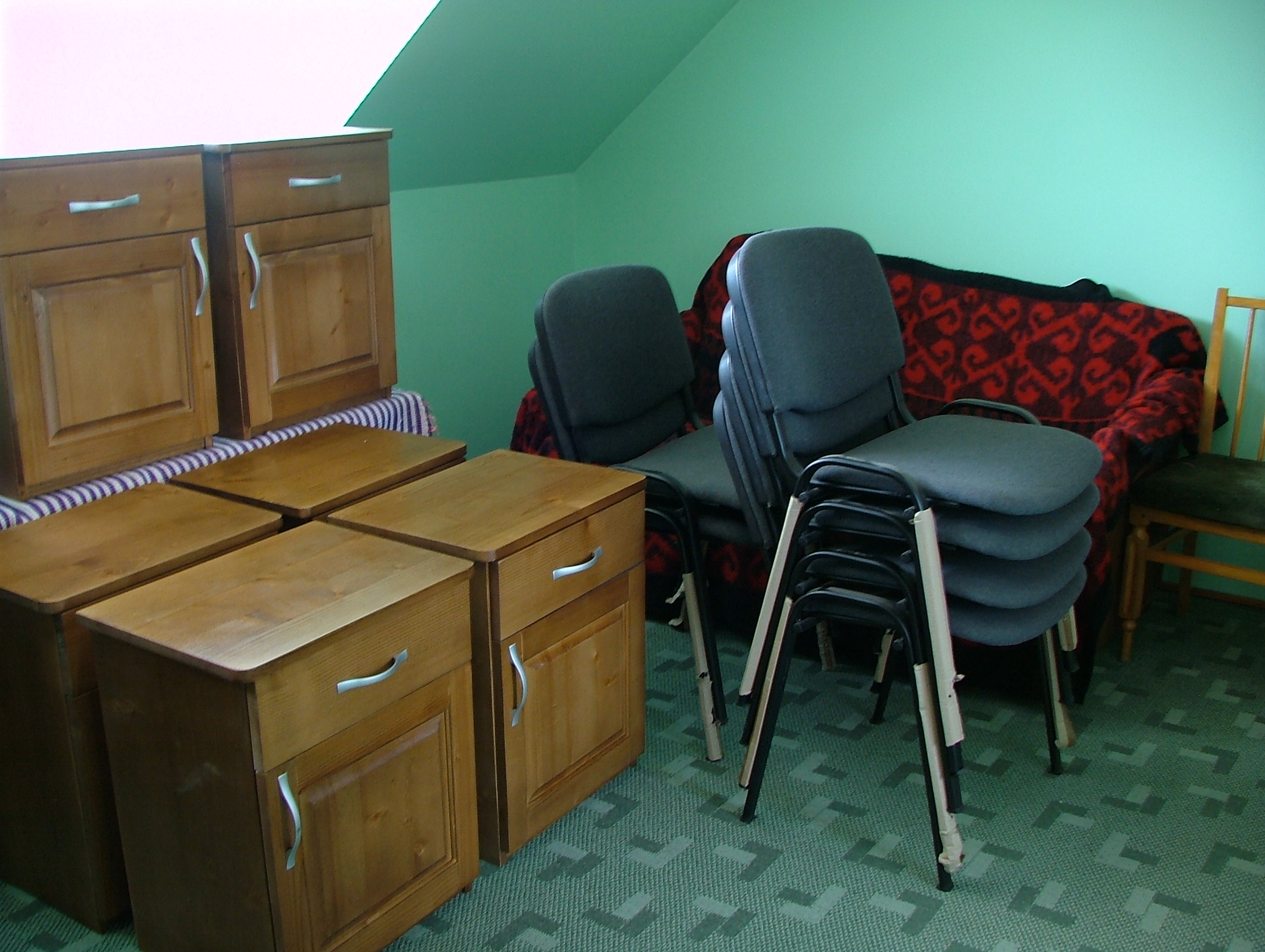
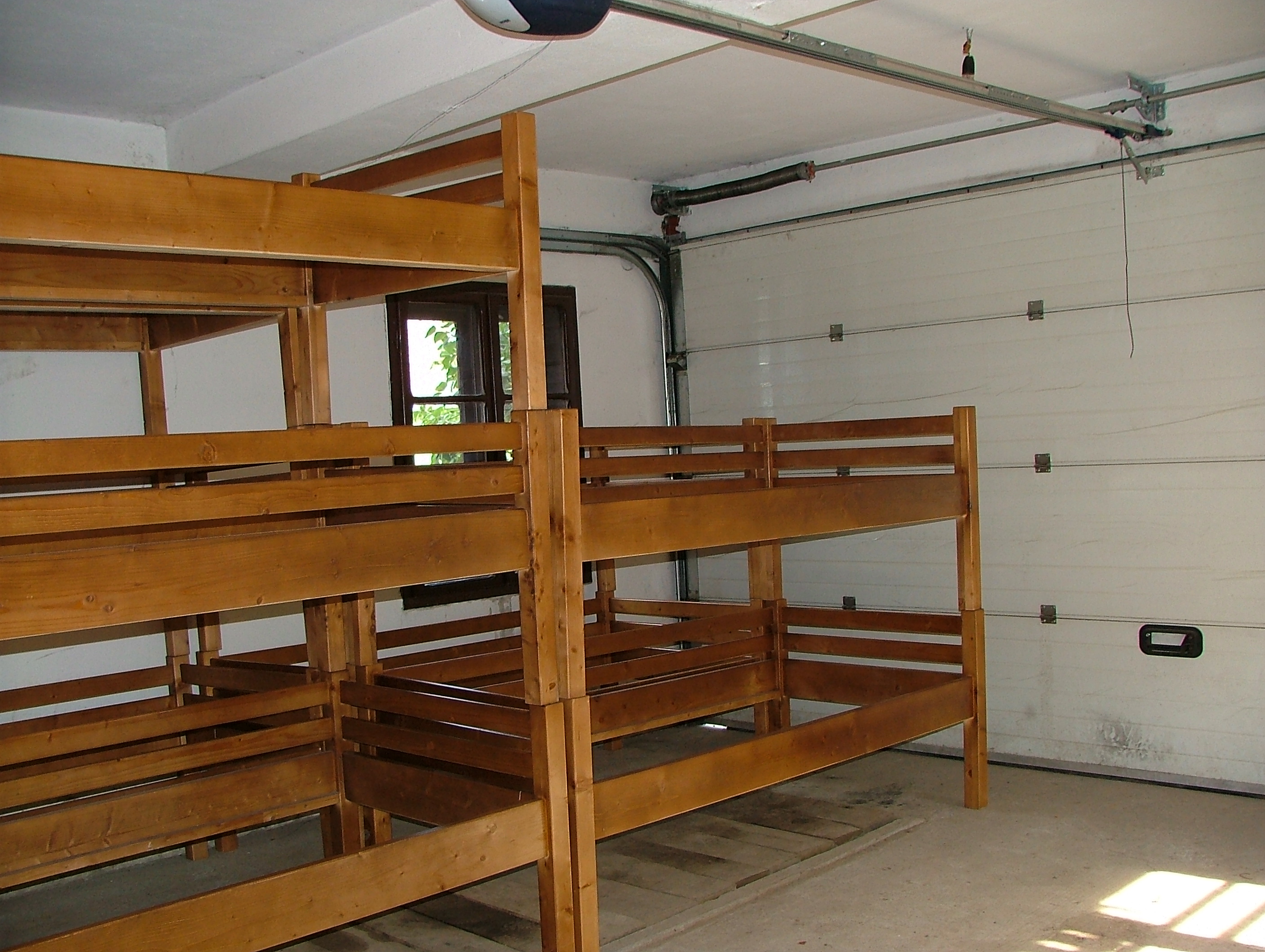
Jozsi and the sons continue to build additional rooms so that they can accommodate between 45-50 patients. Ilonka is now free from the kitchen and oversees all the nurses, cleaners, kitchen, etc. She now has a little more free time and can spend time talking with the patients.
All staff members have taken a course in health and hygiene and all passed the final examination. This is valid for 2 years. The Home will receive full accreditation in September (delay because of holidays). This means that everything is up to – and even higher – than the EU and local standards. This accreditation is valid for several years. General standards have been reached and there are some specific standards which need to be reached in about 2 years time.
It is rumoured that from January the government will pay one salary and give about GBP20 per month per patient. The grandmother of the SDA minister in Dundee, Scotland, is now a resident in the Home.
I believe CAP has made a substantial difference to this nursing home. Everything is going extremely well at the moment and I pray that it will continue to do so.
Ruth Farrer
I’ve just finished a new ‘CAP’ page that gives a summary of what CAP is and why we did it. I trust it proves enlightening…
Between June last year and the end of June this year the good folks of Crieff Church (and a few others) have contributed just over GBP 25,000 (25,811.18 to be precise) either directly from the church funds or from separate donations.
The June contributions were GBP 828.00.
Well done!
1.SUMMARY
The ROPE project will help to answer the needs of the elderly and sick in the village of Chesau, Romania, who are not able to take care of themselves. These people often have no family to care for them, have very little pension or no pension at all. Instead of living in farm barns or on the streets, they will be provided with a comfortable home with all their needs cared for. This home is run by the Horvath family.
2. FINANCIAL STATEMENT
CAP sent out a total of GBP6000 in 2006, in two instalments. This money has been used by the Horvaths to assist in the running of the home as follows:
Details |
Amount |
|
| 1 | Nurses salary for one year | GBP 2,400 |
| 2 | Stainless steel sink x 2 | GBP 423 |
| Stainless steel table | GBP 223 | |
| Refrigerators x 2 | GBP 350 | |
| Kitchen units – part payment | GBP 604 | |
| 3 | Car – partial payment | GBP 2,000 |
| TOTAL | GBP 6,000 |
- Kati (pronounced ‘Cottie’) Tarr, a local nurse, has been employed full time in the home. We will be paying her salary for the duration of the CAP funding (currently 3 years starting in 2006).
- In order to meet EU rules (Romania became part of the EU on 1 January 2007) the home had to equip their kitchen to meet EU standards. This was a legal requirement and had to be completed by the end of October 2006.
- The Horvath family were running two old Ladas, each over twenty years old. They are now in possession of a much more modern second-hand Daewoo Leganza.